
From Breakdown to Breakthrough
learning to trust myself when it matters most

As I post this, I'm approaching day 50 back in Australia (48, to be precise). And no, I'm not counting down each day - though my trusty Google sheet, courtesy of Joe, has the days numbered in the first column, helping me keep track. This Google sheet has become my most reliable and consistent companion. It's where I log all my physio, gym, and recovery sessions, along with my living arrangements, rehab coverage, and key milestones. There's something therapeutic about seeing all the sessions filled out. It is satisfying to look back at the progress I've made and motivating to see what is still left to do.
I vividly remember scrolling through the document on day 7 post-op, filling out my first physio sessions. The empty rows below were overwhelming, knowing how much work was ahead of me. It's crazy to think I need to scroll a few times to get from day 1 to where I am today. It's a good reminder that time really does fly when you're having "fun"…
Adjusting to life and rehab back in Australia has been a strange experience. At first, it felt like I was living in a fever dream. Not only did I move to an entirely new city where I knew no one, but I was also thrown into a completely new environment with a team of people I had zero history with. The lack of familiar faces and being told I was in the best environment for my situation (despite initially feeling otherwise) made things tricky to navigate. My first few weeks were tough. I had my fair share of breakdowns and a handful of challenging, uncomfortable conversations with a variety of people. There were moments when I wanted to pack up and head straight back to physio in Innsbruck. But after seven weeks, I can happily say I'm starting to find my groove.
I just wanted to say a quick thank you to all my friends, family, and coaches for lending an ear and giving me some advice when I needed it those first few weeks—you know who you are. Thank you!
Over the past month and a half, I've learned so much, and I wanted to share some of these lessons to remind you about the power of advocating for yourself and trusting your gut. I'm not just talking about speaking up when something doesn't feel right, I’m talking about the courage to push for what you need to succeed. But before I dive into the specifics of the lessons that the universe has so graciously bestowed on me, I think it's important to set the scene and reflect on what, in hindsight, I now recognize as my "breaking point."
The Phone Call
I'll never forget one particular phone call with Mum while she was in Europe watching my younger brother, Harry, compete at World Juniors. I had then been in Canberra for three or four weeks while sitting alone in my apartment, overwhelmed and uncertain. Through many tears, I poured out my frustrations and concerns about the training program I was following.
In those initial weeks, I had done my best not to jump to negative conclusions and to give the AIS team enough time to show me what they had planned. But there was this voice in my head that wouldn't shut up, constantly reminding me that so much of my confidence on snow comes from the work I do in the gym. And no matter how hard I tried to push it aside, I couldn't ignore that I was struggling to see how I would come back "fitter and stronger than ever" under the current training setup.
That phone call made one thing painfully clear. I wasn't just doubting the program but struggling to trust it. More importantly, I was struggling to trust the team the AIS had put in place for me. From my previous injuries, I know how crucial it is to surround yourself with people who not only know what they're doing but also understand and connect with you. Rehab is a long process, and the people guiding you through it play a huge role in your progress and overall experience.
By this point, I had already been trying to nudge my then Strength and Conditioning (S & C) coach for more structure, clarity, and intensity. But no matter how many times I asked, I wasn't getting the answers I needed. I had been pushing for a more detailed plan — a roadmap that clearly outlined the training phases, the goals behind each session, and how we were going to target the areas of my body that were safe to work on, like my cardio, upper body, and core.
I was craving something more—more intensity, more engagement, more of a challenge—especially since I wasn't able to go all out on my legs just yet. But beyond the program itself, I realized I was craving something deeper. I needed to feel like someone cared, not just about me as an athlete but as a person. I wanted to know that my individual needs, my history, and my goals were being considered and not just shoved into a one-size-fits-all approach.
On that call with Mum, I felt completely lost. I had done everything I thought I was supposed to, asked the right questions, had the hard conversations, and tried to be patient, but I was still spinning my wheels and unsure if I was on the right path. I had voiced my concerns multiple times, speaking directly and often with the OWIA (Olympic Winter Institute of Australia) rehabilitation manager, who echoed similar concerns from his end. Yet, nothing felt like it was changing. And as much as I wanted to pack up and walk away, I knew there was still one stone left unturned at the AIS.
Mum reminded me that I wasn't stuck in this situation (which was lovely to hear at the time) and that other solutions are out there if need be. But she also nudged me toward the uncomfortable truth: if I wanted real answers, I had to attend the Friday all-team meeting and lay everything on the table. I needed clarity. I needed a plan. And, more than anything, I needed the whole, broader team to hear me. I needed to know that the people around me understood the kind of athlete I am, what I was going through, and that I had a team in my corner.
That phone call with Mum was a turning point. It wasn't just a breakdown. I had been pushing for more, but things finally started to shift when I took that next step and walked into the team meeting. I fully expressed my feelings (tears included) and directly advocated for what I needed. As much as I dreaded having that 'big girl' conversation, it turned out to be exactly what I needed to do. And I am really proud of myself for doing so.
Lesson One: Clear is Kind
After laying out all my fears and concerns in that Friday meeting with my broader team of ten-plus people, I had to take the next step — asking for the specific changes I needed and wanted. Through some self-reflection, I realized that my biggest struggle wasn't with the entire program but instead with my S&C coach. It wasn't a question of their expertise or experience; it simply came down to our personalities not clicking, and I felt like I was being given a copy-and-paste approach. While there is nothing inherently wrong with that, I wanted a different experience — one that felt tailored to me and my needs as an athlete. And I came to understand that, at the end of the day, it's okay to ask for just that.
At some point during those first few weeks, my original S&C coach had been out sick, and Taylah had stepped in to cover one of my sessions. In that single session, she asked more questions about me, my history, and my sport than nearly anyone else at the AIS had up to that point. I also appreciated that she was meticulous about the smallest technical aspects of movements. I don't expect people in Australia to fully understand the demands of alpine skiing, but showing curiosity and asking questions goes a long way for me.
I had previously mentioned that there was still one stone left unturned at the AIS. That stone was for me to see if I could get Taylah as my S&C coach. That one session with her left me with a gut feeling that she needed to be part of my team. So, when I sat in that Friday meeting, faced with the moment where I had to clearly and directly ask for exactly what I needed, I knew what I had to say. I needed a coaching change, and I asked for Taylah to join my team.
And that's when I truly understood that clear is kind.
For weeks, I had been trying to push for change without entirely saying what I needed. I had danced around the discomfort of asking for something different, worrying that I'd sound ungrateful or difficult or come off as a brat. But in that meeting, when I finally said it outright, I realized that being direct wasn't just beneficial for me. It was beneficial for everyone involved. It allowed my team to support me in the way I actually needed, rather than guessing or making assumptions.
Clarity isn't always easy, and advocating for yourself can feel uncomfortable. But I've learned that the kindest thing you can do for yourself and those around you is to be upfront about what you need. Because without clarity, no one can truly help you. And most people like to help :)
Lesson Two: The Grass Isn't Always Greener
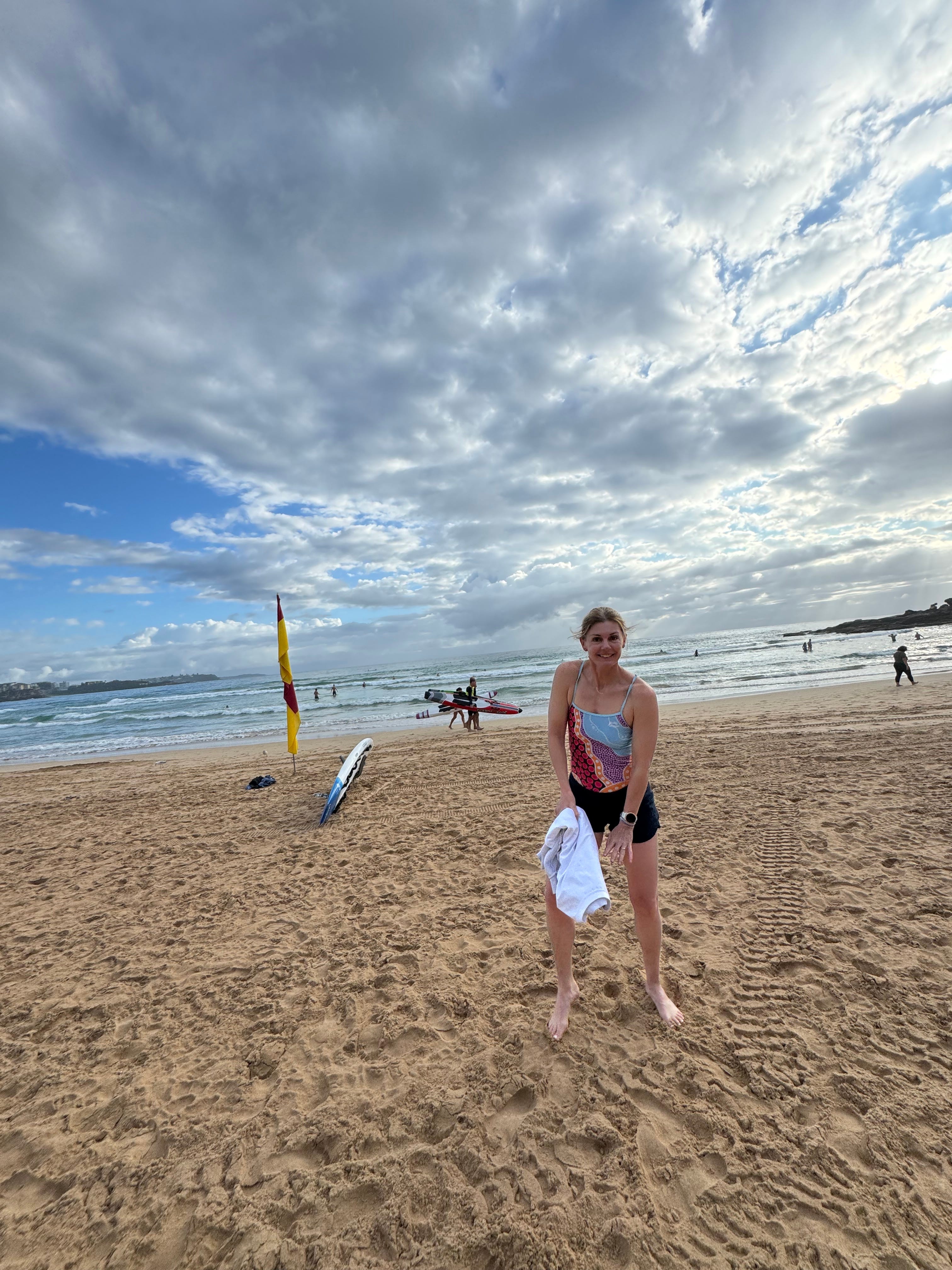
Before walking into that Friday meeting, I had moments where I genuinely questioned whether I was even in the right place. I started imagining my ideal rehab situation and wondered if I should relocate back to Manly for the rest of my recovery. My logic was simple. I was already sacrificing so much of my life outside of training and rehab to stay in Canberra, and at times, it felt like I was getting mediocre care. So, if I could outsource everything I needed in Manly, wouldn't it make more sense to do my rehab there, where I could at least lie on the beach between sessions and be closer to some of my family and friends?
In an attempt to make a rational decision rather than an emotional one, I sat down and mapped out what my ideal rehab setup would look like. I wrote out an entire daily and weekly plan, listing every detail I wanted in my recovery process. And when I stepped back to compare it to my current setup in Canberra, the reality hit me — it wasn't all that different. The only real difference was that one house was by the beach while the other wasn't, and even though I had a few more friends nearby in Manly, they all had busy jobs and wouldn't necessarily be available for a catch-up when I was.
What really stood out, though, was the realization that if I moved back to Manly, I'd have to take on a much larger role in managing my own rehab. I'd be responsible for coordinating between multiple specialists, scheduling sessions, and ensuring everything aligned with my recovery plan. Ironically, "being the rehab manager" was something I had flagged early on as something I didn't want to take on entirely by myself. I wanted a team that would help handle the logistics of rehab, so I could focus purely on getting better.
And that's when it hit me: the grass isn't always greener.
When things don’t go as planned, it’s easy to romanticize a different situation. But more often than not, what we need isn’t a drastic change. Moving somewhere new wouldn’t magically erase my frustration or make rehab easier. Instead of chasing an idealized version of the perfect rehab setup, I realized I needed to focus on what was right in front of me. Small tweaks, not a massive overhaul, would help me get the most out of it.
Through this, I was reminded of the timeless saying: the grass isn’t always greener on the other side—it’s greener where you water it. I had a choice. I could keep wishing for a different reality, or I could use my energy into making the best of the one I was in.
Lesson Three: Conquering the "What Ifs"
While I hate to admit it, during the first few weeks of my time in Australia, I was trapped in a negative mental loop, constantly dwelling on the most dramatic and worst-case "what if" questions my brain could come up with. What if I get on snow and my knees hurt? What if I'm not fit enough? What if I'm not strong enough? What if I come back slow? What if I get hurt again? What if I fail?
As much as I like to think of myself as a mentally tough athlete, it took me a while to realize just how much that negative outlook and self-talk was affecting me.
It was one thing to acknowledge that I was stuck in this cycle of negativity, but it took even longer to sit and reflect on why it kept coming up. After some time and a thoughtful conversation with a dear friend, I realized that all these "what ifs" stemmed from fear, a fear of uncertainty. And as much as I could sit there and ask all the questions in the world, the truth was that those uncertainties weren't going anywhere. The reality is that I have no idea how my body will feel when it's time to ski. Far out, I barely know how my knees will feel tomorrow! So, trying to project that far ahead and obsess over "what if" scenarios wasn't only unproductive but unfair to my own sanity.
The turning point came when I realized that it was up to me to take control of the narrative. I could choose to stay stuck in this fear-based mindset, letting the unknowns run the show, or I could choose to take ownership of the process. I put myself in this position, choosing to be in Canberra, choosing this rehab journey, and choosing to come back to ski racing. At the end of the day, it's my choice to move forward and no one else's.
So, I made the decision to politely and respectfully suck it up and get to work. No more dwelling on things I can't control. No more letting fear dictate my thoughts and actions. It was time to face this challenge head-on, embrace the discomfort, acknowledge the unknowns, and put in the work. I can't predict the future, but I can control how I show up every single day, and that's what matters most.
However, another shift really helped me (shoutout to my friend, Katie, for talking me through this one): what if I turned those negative "what ifs" around? Instead of obsessing over all the worst-case scenarios, why not ask myself, "what if it all works out?" What if I am stronger than I think? What if this rehab journey brings me back better than before? What if all the hard work I put in today pays off tomorrow? Changing the question didn't just change my mindset. It shifted my whole approach. It empowered me to take action out of possibility instead of fear.
Looking back at these 50 days in Australia, I've realized that advocating for myself isn't just important—it's essential. I've learned that clear communication, trusting my gut, and focusing on what I can control can turn what once felt like an overwhelming journey into one filled with small wins and meaningful growth. That Google sheet that once intimidated me? It's becoming a reminder of how far I've come.
I still don't know how my knees will feel when I eventually get back on the slopes, but I've stopped letting the unknowns take over. Instead, I am choosing to show up every day, keep my head down and bum up, and ask myself a new question: What if it all works out even better than I can imagine? Sure, I can't control every uncertainty ahead, but I can control how I face them - with courage, determination, and the confidence that I'm not just strengthening my body but my mind and spirit, too.
On a different note, I'm excited to discuss a few topics in the coming weeks. If there's anything specific you'd love to hear about, feel free to let me know!
Enjoy today,
Mads





So good to read Madi! U r amazing and your physical and inner strength shine through. Thanks for the top tip about not leaning into negative “what ifs”. We can all use that reminde. Love from us all in PC 💖
Keep after it Maddie! Pulling for you.